When an Open Container Triggers a DUI in Mississippi, Call a Lawyer

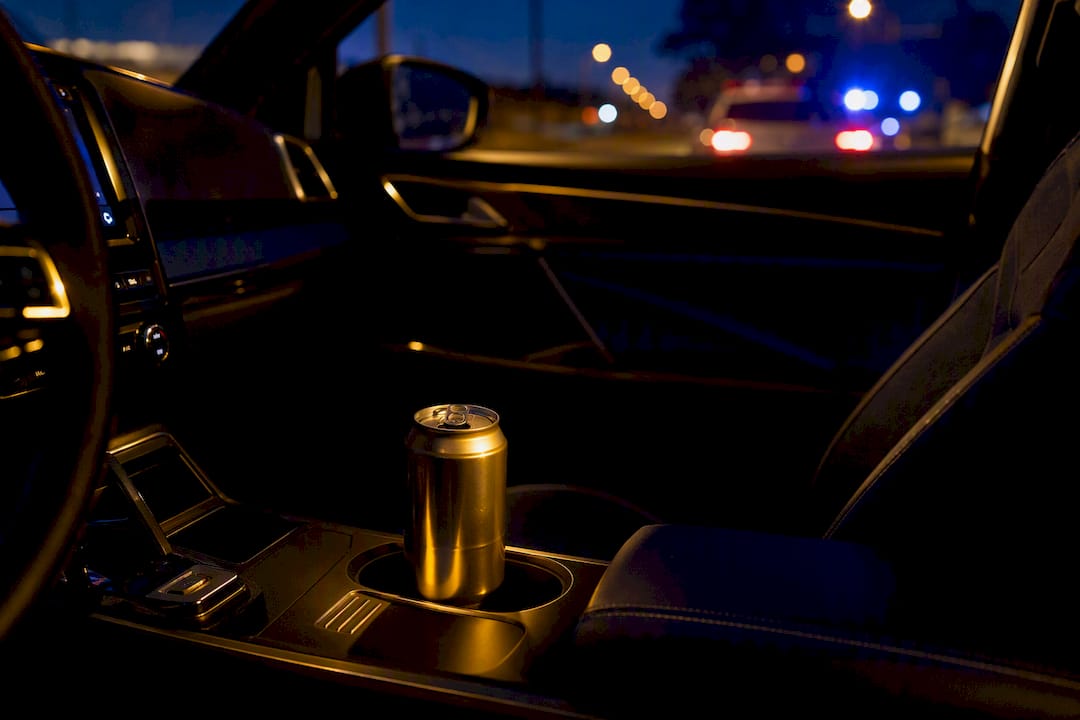
**********Mississippi does not have a statewide law banning open alcohol containers inside a moving vehicle, a notable exception among U.S. states. That does not mean drinking behind the wheel is safe or risk-free. The National Conference of State Legislatures lists Mississippi among a small handful of jurisdictions without a standard open-container prohibition, but local ordinances, DUI laws, and public-intoxication statutes still create serious legal exposure.
TL;DR:
Open-container citations in Mississippi generally depend on applicable local ordinances, which may differ by jurisdiction.
Enforcement depends on the specific ordinance and the facts surrounding the alleged violation.
Mississippi’s more limited open container rules place it among only a few states with no blanket passenger-area possession ban, making local jurisdiction interpretation critical.
Table of Contents
Open Container Mississippi: What the Law Actually Says
Mississippi does not have a general statewide law prohibiting open alcohol containers in passenger vehicles. However, cities and counties may enforce local ordinances restricting open containers or alcohol consumption in vehicles. Mississippi’s DUI laws also apply when a driver operates a vehicle while impaired or has a prohibited blood alcohol concentration. The applicable law depends on the circumstances and where the incident occurred
Many states have open-container laws that distinguish between passenger compartments and storage areas such as trunks. Mississippi does not have a general statewide passenger-area possession ban, so those distinctions are not universal requirements under Mississippi law. Local ordinances may contain their own definitions and restrictions, which must be examined when evaluating a particular citation.
Here’s what tends to matter most when an officer is deciding whether to write a citation:
Whether the driver was actually drinking, not just possessing a container
Whether the container was within arm’s reach or sealed and stowed away
Whether the vehicle was moving on a public road at the time
Whether a local city or county ordinance imposes a stricter standard than state law
Mississippi’s lack of a general statewide open-container prohibition does not prevent local governments from adopting applicable alcohol-related ordinances. Cities and counties may have different restrictions, so conduct permitted in one location could result in a citation elsewhere. The important question is whether an enforceable local ordinance applies to the circumstances of the incident
Where the Rule Applies and When Exceptions Kick In
Whether an open container is legal in a Mississippi vehicle depends on applicable local ordinances and the circumstances. Mississippi does not have a statewide vehicle open-container law establishing special exemptions for parked vehicles, motor homes, limousines, or locked storage compartments.
In a Mississippi open-container case, prosecutors must establish the elements of the particular local ordinance allegedly violated. Some ordinances may distinguish between possession, consumption, and where alcohol was located inside a vehicle. There is no general statewide requirement that prosecutors prove an open container was within reach of the driver or a passenger.
Penalties, Enforcement Patterns, and DUI Overlap
Open-container citations in Mississippi typically carry fines and a court date, and the exact amount can vary by city or county depending on which local ordinance applies. Because Mississippi lacks a single uniform statewide penalty schedule for open containers the way DUI law does, enforcement tends to look different from one jurisdiction to the next.
Fines for a local open-container ordinance violation
A required court appearance in municipal or justice court
Possible escalation if the container is tied to other observed violations
Increased scrutiny during any subsequent traffic stop or arrest
Here’s the part that catches people off guard: an open container in plain view is rarely the end of the story. NHTSA’s impaired-driving enforcement guidance confirms that officers routinely treat a visible container as a cue to investigate further, meaning a simple citation can turn into field sobriety tests, a breathalyzer request, or an arrest for DUI if the officer suspects impairment.
That distinction between the two charges is critical. An open-container violation depends on the specific local law being enforced. A DUI charge is different: Mississippi law prohibits driving while impaired or operating a vehicle with a blood alcohol concentration at or above the applicable statutory limit. One does not automatically prove the other, but officers frequently use the first to justify investigating the second.
What to Do if You’re Cited, and When to Call a DUI Attorney
Defending an open-container citation in Mississippi begins with identifying the specific ordinance or law the officer alleges was violated. An attorney can examine whether the ordinance applies to the location, whether the container meets its legal definition, and whether the officer obtained the evidence lawfully. If the incident also resulted in a DUI charge, the defense may examine the legality of the traffic stop, evidence of impairment, and chemical testing procedures.
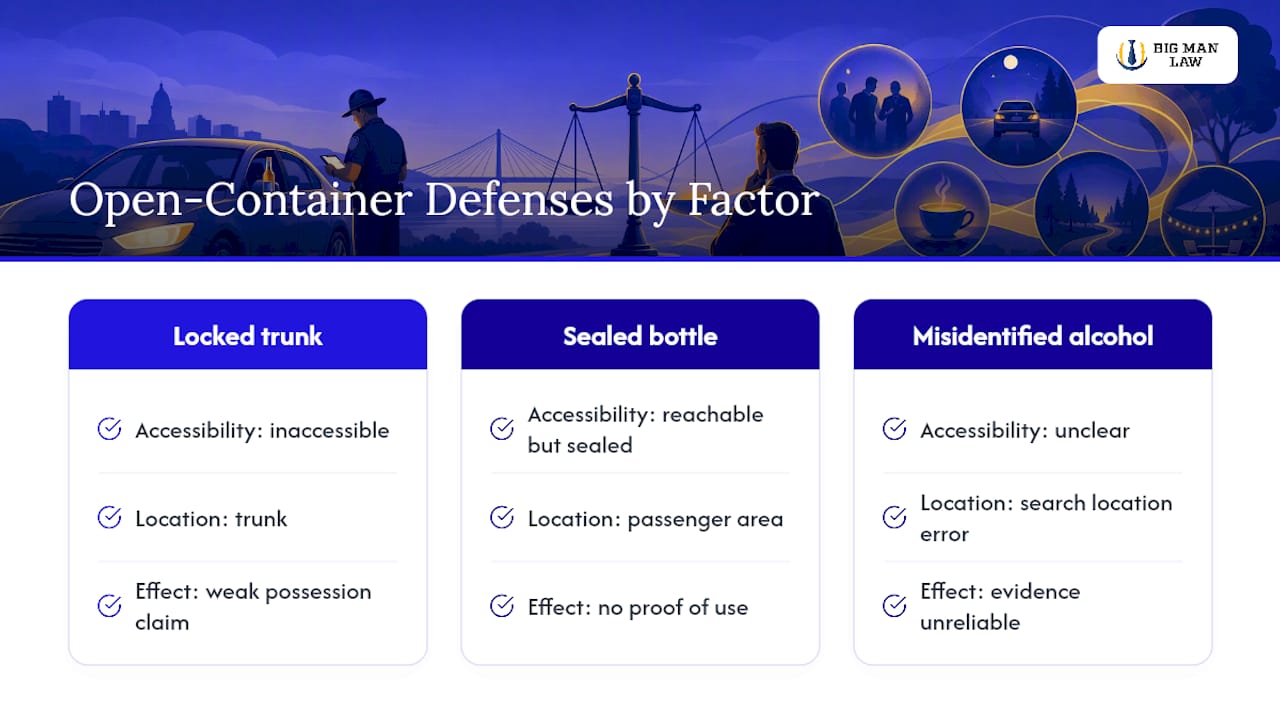
If you get pulled over and an officer flags a container, what you do in the next few minutes matters more than most drivers realize.
Pro Tip: Take a photo of exactly where the container was sitting before an officer moves it or removes it from the vehicle. Location is often the entire case, and a clear picture beats a foggy memory three months later in court.
Beyond that, avoid volunteering statements about drinking, get contact information from any passengers who witnessed the stop, and request a copy of the police report as soon as it’s available. Prior record, elevated BAC readings, or additional charges stacked onto the citation all raise the stakes considerably. That’s when an attorney’s ability to challenge the stop itself, the search, or the officer’s procedure can change the entire trajectory of a case.
How Mississippi’s Approach Compares to Other States
Most states ban open containers in the passenger area outright, covering both drivers and passengers under a single statute. Mississippi’s more limited approach, confirmed by NCSL’s state-by-state comparison, puts it alongside only a few other jurisdictions nationally without that blanket prohibition.
Most states prohibit possession by anyone in the passenger area, driver or passenger
A smaller group restricts the ban to drivers only, leaving passengers with more latitude
A few states carve out exceptions for designated entertainment or common-consumption districts
Mississippi has no general statewide vehicle open-container prohibition; applicable local restrictions may differ.
For Mississippi drivers, the practical takeaway is simple: don’t assume the rules travel with you. Cross into a neighboring state with a strict passenger-area ban, and a container that would raise no issue on a Jackson street can turn into an immediate citation, or worse, once you’re pulled over somewhere else.
If you’ve already been cited for an open container, or that stop escalated into a DUI arrest, the details of where the container sat and what the officer actually observed can decide the outcome. Joey Franks and the team at Big Man Law’s criminal defense practice review the evidence, the stop, and the paperwork before deciding how to fight the charge, because in these cases, the fine print usually matters more than the citation itself.
This article is general information, not a substitute for advice from a qualified lawyer. Consult a qualified legal professional about your own circumstances before acting on anything here.
Sources
Recommended
Comments