The Prosecutor's Role in a DUI Case, Explained


xxx The prosecutor is the government’s lawyer who decides whether to charge you and then must prove your DUI beyond a reasonable doubt. That single fact shapes everything that happens next in your case. The top duties break down like this:
Charging decision: deciding if the evidence supports filing at all
Evidence review: examining police reports, chemical tests, and video
Filing formal charges: committing the state to a specific case theory
Plea negotiation: weighing reduced charges against trial risk
Trial presentation: proving every element to a jury
Here’s the critical point: most DUI cases don’t turn on whether you were drinking. They turn on whether the traffic stop was legal, whether the chain of custody held up, and whether the breath or blood test was reliable. Attorney Joey Franks has built his practice at Big Man Law around exactly those pressure points.
Key Takeaways
The prosecutor’s power in a DUI case rests on proving every legal element beyond a reasonable doubt, and that burden creates specific, exploitable weak points in the state’s evidence.
Point | Details |
Charging is a filter, not a formality | Prosecutors apply a higher standard than police, screening for evidence that can win beyond a reasonable doubt. |
Documentation drives outcomes | Calibration logs, chain-of-custody records, and lab reports often decide cases more than officer testimony. |
Plea outcomes depend on Mississippi law | Negotiated resolutions may be possible, but DUI nonadjudication has specific eligibility requirements and mandatory penalties for certain repeat offenses cannot be reduced through plea bargaining… |
Suppression motions matter early | Challenging the traffic stop or test reliability before accepting a plea preserves the strongest leverage. |
Expert preparation shapes trial strategy | Prosecutors rely on toxicologists and reconstructionists, especially in low-BAC and refusal cases. |
This article is general information, not a substitute for advice from a qualified lawyer. Consult a qualified legal professional about your own circumstances before acting on anything here.
Table of Contents
What Is the Role of the Prosecutor in a DUI Case Before Charges Are Filed?
In Mississippi, a DUI case often begins when a law enforcement officer issues a citation or files an affidavit charging the offense. Depending on the court and the seriousness of the charge, a municipal prosecutor, county prosecutor or district attorney may handle the prosecution. Prosecutors review the available evidence, determine whether the charge can be supported and decide how to proceed. Police generally need probable cause for an arrest, while prosecutors must ultimately prove every element of a criminal charge beyond a reasonable doubt at trial. Not every Mississippi DUI case is decided by a twelve-person jury.
That gap between the two standards matters enormously to anyone recently arrested. A prosecutor reviewing a DUI referral isn’t just checking boxes. They’re evaluating whether the stop was constitutional, whether the chemical test was administered correctly, and whether the paperwork will survive a defense challenge. Catalyst Legal notes that prosecutors evaluate police reports, test results, and witness statements before deciding on charges, and that filter role means the police officer’s opinion is never the final word.
Several factors influence the charging call beyond raw evidence strength:
Prior DUI history, which affects both charging level and sentencing exposure
Caseload and resource limits, since not every borderline case gets prosecuted aggressively
Public safety considerations, particularly in crash or injury cases
Local office policy on diversion or deferred prosecution for first-time, low-BAC offenders
Mississippi law allows certain first-time DUI defendants to seek nonadjudication under Mississippi Code § 63-11-30(14). If the court approves the request, it can withhold adjudication of guilt while the defendant completes specific requirements, which may include alcohol education, fines, court supervision and an ignition interlock restriction. Eligibility is limited by factors including prior DUI convictions, pending DUI charges, previous nonadjudication and commercial driver’s license status. The court has discretion, and completing the program’s requirements is necessary to obtain a nonadjudication order.
How Prosecutors Build a DUI Case Against You
Once charges are filed, the prosecutor’s job shifts from gatekeeping to case-building. The DWI Prosecutors handbook from the National District Attorneys Association stresses that prosecutors must review the totality of the documentation before committing to a theory of the case, and that means assembling a substantial file. Here’s what typically goes into it:
Officer narrative reports documenting the stop, arrest, and observed behavior
Dashcam and bodycam footage, which either supports or undercuts the officer’s account
Standardized field sobriety test notes, scored against NHTSA protocols
Breath or blood test results, along with the lab’s chain-of-custody paperwork
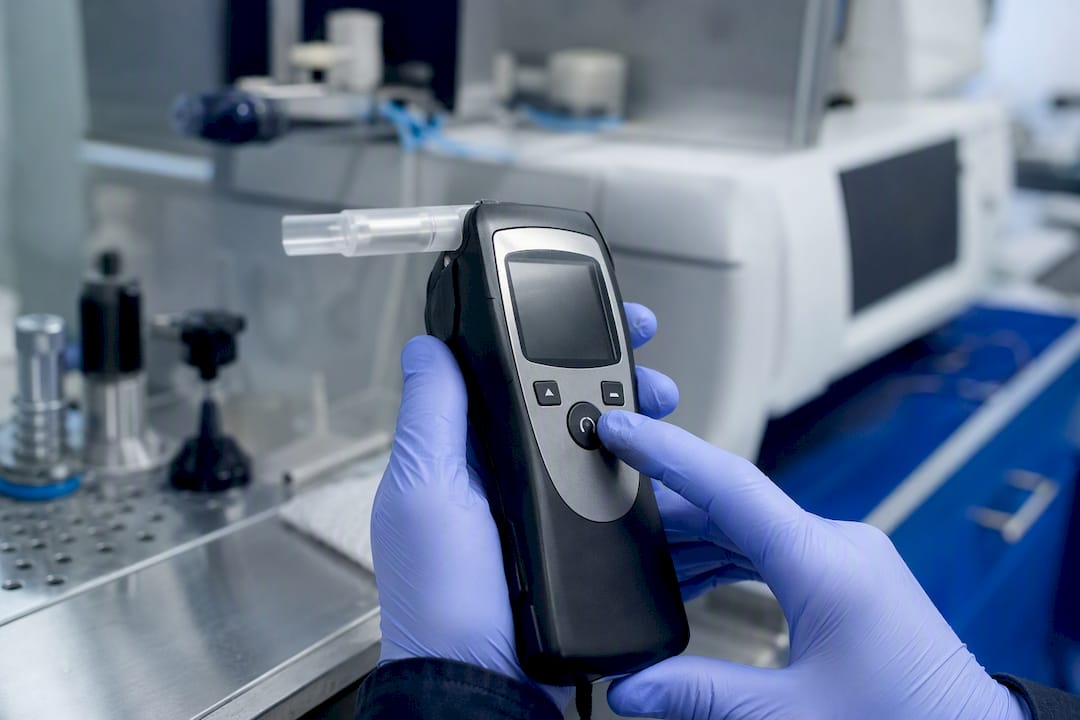
Instrument calibration and maintenance logs for the breath testing device
Collision reconstruction reports, when the DUI involved a crash
Toxicologists explain what a given BAC means for impairment. Drug recognition experts testify about impairment from substances a breathalyzer can’t detect. Lab technicians authenticate blood samples. Reconstructionists explain how a crash likely happened. Prosecutors have to qualify each of these witnesses as an expert before a judge lets them testify, which means vetting their credentials well before trial.
Pro Tip: If you’re facing charges, ask your attorney to request the breath instrument’s full calibration and maintenance history in discovery. Gaps in that log are among the most common reasons chemical test results get thrown out.
What Must a Prosecutor Prove to Win a DUI Conviction?
Every DUI prosecution rests on the same core elements, regardless of jurisdiction: the defendant operated a vehicle, the defendant was impaired or over the legal BAC limit, and both conditions existed at the time of driving, not just at the time of testing.
That last element sounds technical, but it drives a surprising amount of courtroom strategy. Blood draws and breath tests almost never happen the instant someone is pulled over. Prosecutors often rely on retrograde extrapolation, using a scientific formula to estimate what a driver’s BAC would have been at the time of driving, based on the test taken later. That method has real limits, and TDCAA’s guidance for new DUI prosecutors recommends building expert preparation around it well before trial, especially in low-BAC or refusal cases where the margin for error is thin.
To prove impairment itself, prosecutors lean on a mix of evidence:
Officer observations of driving pattern, speech, and coordination
Performance on standardized field sobriety tests
Any admissions made at the scene
Physical evidence like open containers or odor of alcohol
All of it has to add up to proof beyond a reasonable doubt, the highest standard in American law.
Why Do Most DUI Cases End in a Plea Instead of a Trial?
Trials are expensive, unpredictable, and time-consuming, which is exactly why most DUI cases resolve through negotiation rather than a verdict. Prosecutors weigh the strength of their evidence against the cost of trial and often extend an offer rather than risk losing outright.
Possible resolutions in a Mississippi DUI case depend on the charge, the evidence, the defendant’s record and applicable statutory restrictions. A qualifying first-time offender may seek nonadjudication under § 63-11-30(14). Other cases may involve a negotiated plea to a legally supported charge or a sentence within the applicable statutory limits. Mississippi law restricts the reduction or suspension of mandatory minimum penalties for certain repeat DUI offenses. Ignition interlock requirements may apply independently of any plea negotiation.
What a prosecutor is willing to offer depends heavily on the specifics: a first-time offender with a BAC just over the limit gets treated very differently than someone with prior convictions or a case involving a crash and injuries. Community safety concerns weigh into every offer a prosecutor makes.
If you’re weighing a plea, don’t decide alone. What looks like a reasonable deal on paper can carry consequences, license impacts, immigration issues, employment background checks, that aren’t obvious until later. Talk it through with defense counsel before you sign anything.
What Weaknesses Commonly Get DUI Charges Dismissed?
DUI cases collapse for surprisingly mundane reasons, and defense attorneys know exactly where to look. The NDAA handbook points to breath and blood testing failures as among the most decisive factors in suppression and dismissal motions.
An illegal traffic stop. If the officer lacked reasonable suspicion or probable cause to pull you over in the first place, everything found afterward can be suppressed. Big Man Law has covered exactly why traffic stops get challenged in court in detail.
Chain-of-custody gaps. If a blood sample sat unrefrigerated, changed hands without documentation, or arrived at the lab late, its reliability becomes fair game for a defense challenge.
Instrument calibration or operator error. A breath test machine that missed a scheduled calibration, or an officer not certified to administer it, can gut the state’s strongest piece of evidence.
Missing video or inconsistent reports. When bodycam footage contradicts the written report, or key footage simply doesn’t exist, credibility problems follow the prosecution into every hearing.
Pro Tip: Request every piece of discovery early, including the specific model and serial number of the breath testing device used. Prosecutors and defense attorneys alike know that instrument records tell a story the officer’s report often leaves out.
What Happens at Each Stage if Your DUI Case Goes to Trial?
A Mississippi DUI case generally proceeds through an initial appearance or arraignment, evidence disclosure, pretrial motions, possible plea negotiations, trial and sentencing. The precise sequence depends on the court and the charge. The prosecutor represents the government throughout the proceedings.
At arraignment, the court advises the defendant of the charge and obtains a plea, unless arraignment is properly waived.
During discovery, the prosecution provides evidence required by Mississippi’s criminal procedure rules, and the defense examines police reports, chemical tests and available video.
Suppression hearings, when necessary, allow the court to decide whether challenged evidence may be admitted.
At trial, the prosecutor presents witnesses and evidence. Depending on the court and offense, the case may be decided by a judge or jury.
At sentencing, the prosecutor may make recommendations, but the judge imposes the sentence within applicable legal requirements.
If your case is headed toward trial, timing matters. Requesting discovery early and pushing for a suppression hearing before accepting any plea offer gives your attorney real leverage.
What Do Experienced DUI Attorneys Notice About Prosecutors’ Preparation?
Traffic Safety Resource Prosecutors, specialized prosecutors trained under NHTSA guidance, provide in-state technical support on toxicology, crash reconstruction, and trial advocacy that line prosecutors rely on in complex cases, according to the Traffic Safety Resource Prosecutor Manual. That training shows up most in low-BAC and refusal cases, where prosecutors lean harder on expert testimony to fill evidentiary gaps.
“Prosecutors who develop their closing argument first, then use that same jury charge language throughout opening statements and witness examinations, build a more coherent case from day one,” according to trial strategy guidance published by TDCAA.
Attorney Joey Franks has spent years studying exactly how prosecutors build these cases, which is what informs Big Man Law’s approach to challenging them.
Ready to Talk Through Your DUI Case?
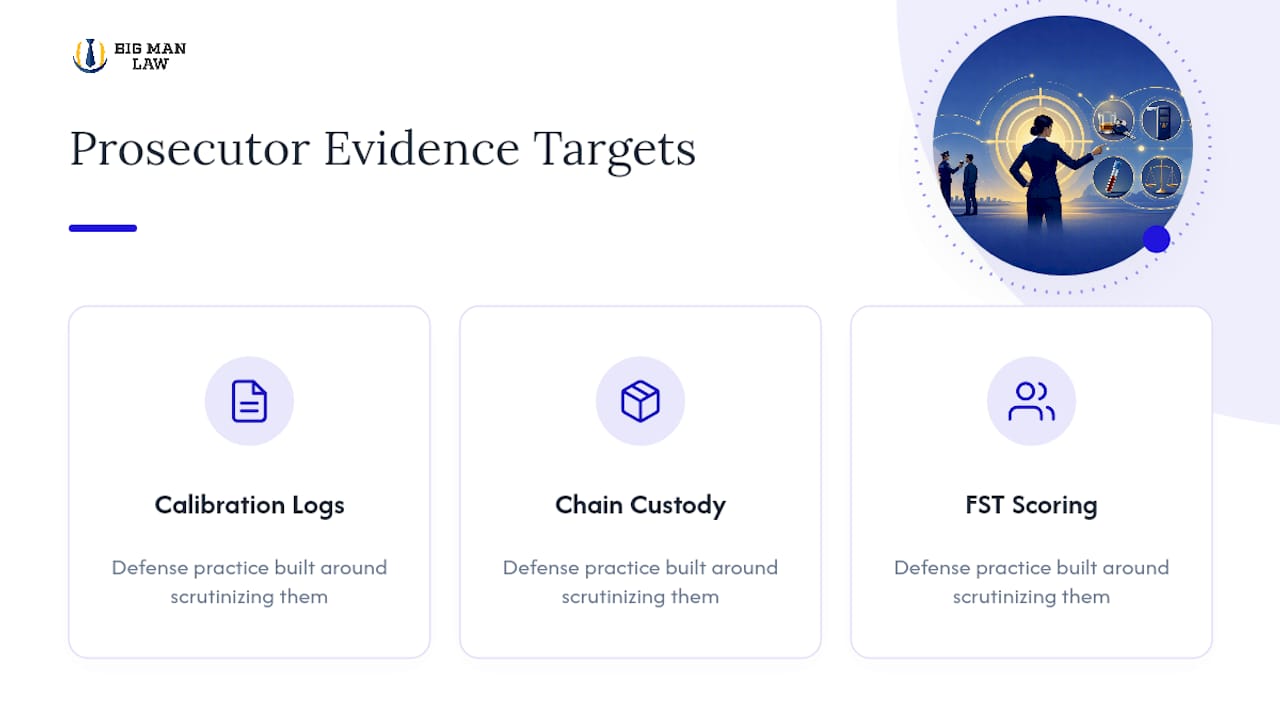
Understanding what a prosecutor has to prove is only half the equation. The other half is knowing where their case is weakest, and that requires someone who has spent time on both sides of the discovery table. Attorney Joey Franks at Big Man Law has built a defense practice in Jackson, Mississippi, around scrutinizing exactly the evidence prosecutors rely on: calibration logs, chain-of-custody records, and field sobriety test scoring.
If you’ve been charged with DUI, don’t wait until your court date to get answers. Visit the DUI defense page at Big Man Law to learn how the Big Man can start reviewing your case today.
Sources
Recommended
Comments